




To view the full print/pdf version of 2026's issue 3 of Currents, click here
For previous issues of Currents, visit our Currents Library
Your At-Cost Utility

By: Chris Reese, President & CEO
Email: contacttheceo@sussexrec.com
Sussex Rural Electric Cooperative stands out from New Jersey’s other electric utilities for many reasons. One major reason is a unique business model that defines our planning and operations, what we charge for our service, and our relationship with those we serve.
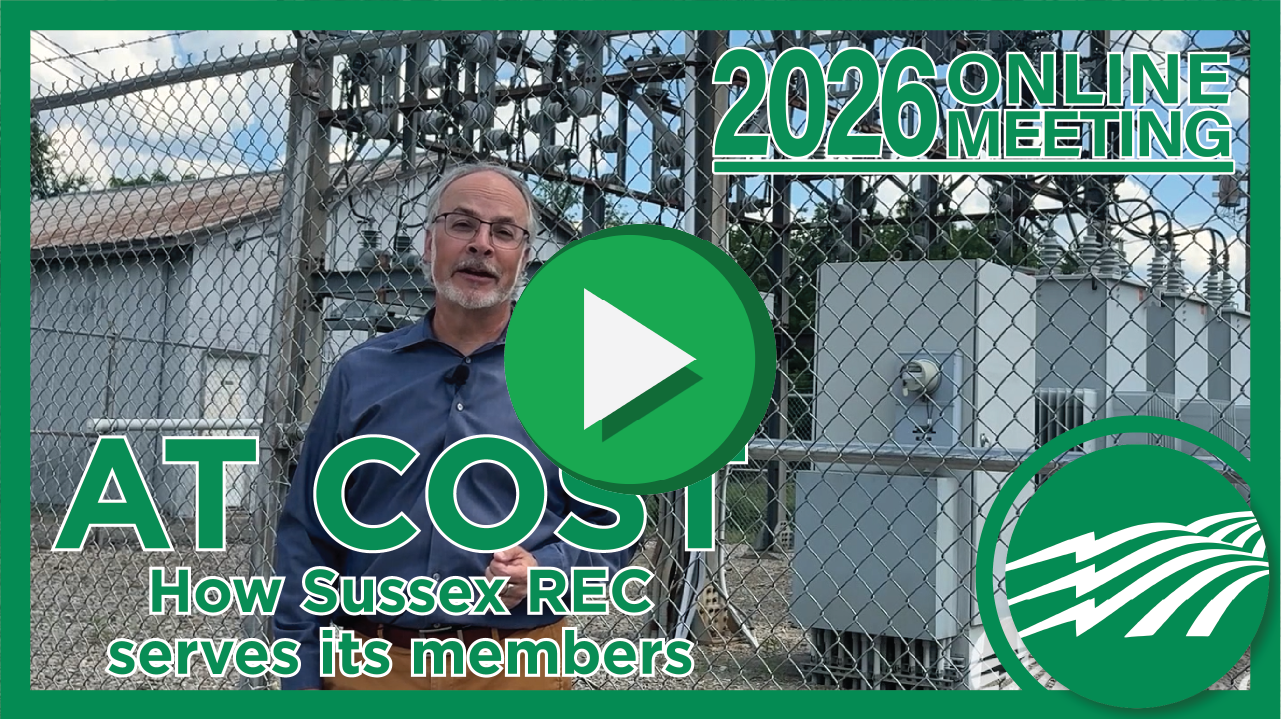
You may have heard Sussex REC described as an “at cost” utility before, but what exactly does this mean? In early July, I dove into this concept in a video for our 2026 Online Meeting. You can watch it at www.sussexrec.com/ann-mtg, along with our other Online Meeting videos which provide updates on your Co-op’s operations.
Since our founding as a not-for-profit, member-owned cooperative in 1937, we’ve operated with an at-cost model. We structure our budgets, rates, and processes differently from our neighboring, for-profit utilities. Our mission has always been to provide the highest quality of service at the lowest possible cost. We aim to provide the level of service our members deserve, with no markup beyond what’s needed to operate. We prioritize high-quality service over profit, which is particularly relevant at a time when costs are rising for consumers and for-profit utilities are being questioned over their rates and profit margins.
Running an at-cost utility requires a lot of planning, forethought, and expertise. Through a year-round process, we forecast our expected costs. We account for both the costs we control directly, like maintenance, tree trimming, and staffing, and the costs we don’t control, like power supply, essential materials and equipment, and costs related to storms. We make our long-term and short-term financial decisions based on all this information, keeping our budgets as low as we feasibly can while providing the best service possible to our members.
We purposefully make next to no profit on our operations. In 2025, we ended the year with only a 3% profit. 2026 is budgeted with just a 1.7% markup on $27 million in costs and expenses. These are figures that are practically unheard of in the business world, especially for electric utilities.
We make decisions based on safety, reliability, and affordability, and never based on profits. When we do make a profit, that money is returned to members as capital credits, putting money back in the pockets of the members who co-own the Co-op.
Costs to provide our high standard of service have risen in recent years, and this has affected what our members pay each month. But through it all, we’re proud to say that our at-cost nature continues to be a benefit. Our members are insulated from the magnitude of cost increases faced by most of the state, much of which goes to the shareholders who profit off of investor-owned utilities’ operations and who often don’t even receive electric service from those companies.
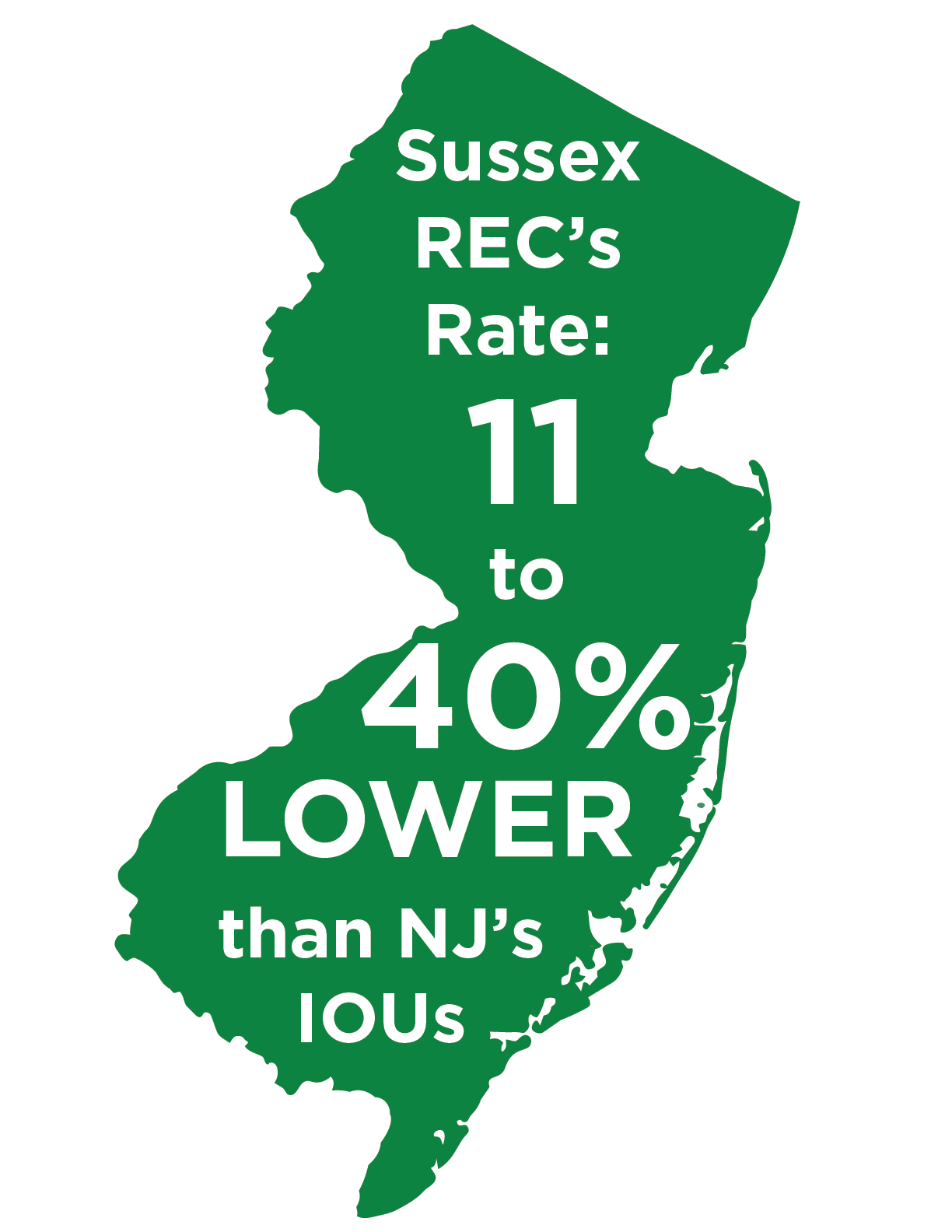 Our rates are 11 to 40% lower than those of New Jersey’s four investor-owned utilities. That means our members enjoy lower costs for power than 99.5% of the state, while also benefitting from membership in a cooperative utility which they co-own, democratically control, and that is managed locally by members of their community.
We are living up to that same mission we’ve held to since 1937, when we were founded by the community to meet a need for power that only an at-cost, member-owned co-op could.